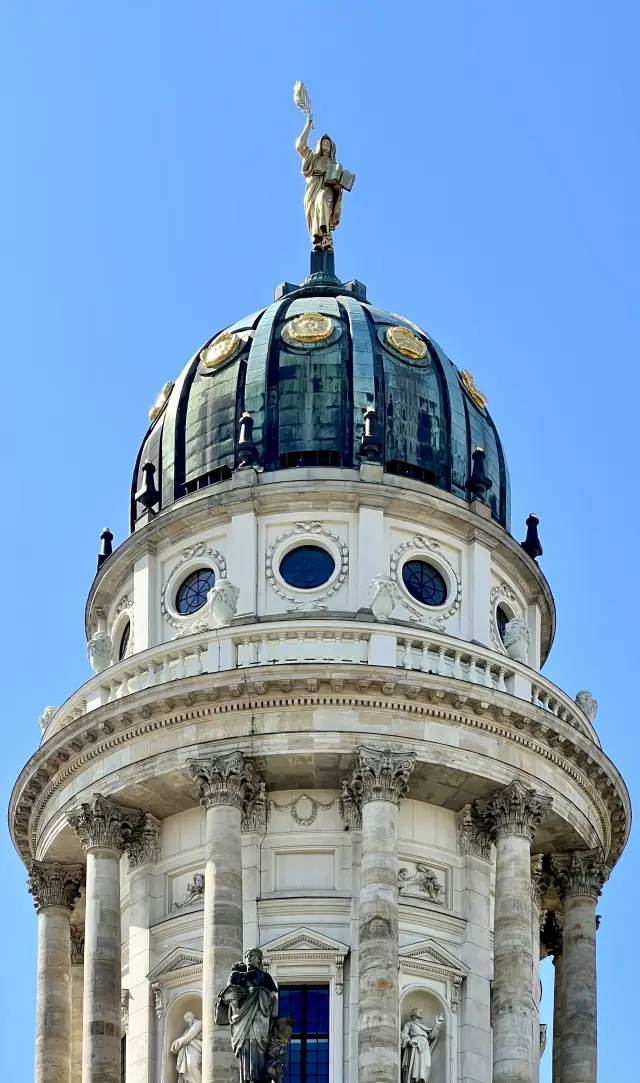
Every figure that stands on a plinth in Berlin has older pictures behind it. George rides to the dragon in Venice, Madrid and London; Neptune calms the storm in Rubens; Schiller looks out from the portraits his contemporaries painted. This series presents, for each figure, the paintings that shaped its image in Europe, with painter, year, collection and the sources behind the details.
All pictures shown are in the public domain and come from Wikimedia Commons. Painter, year and location are taken from each file's metadata and from museum collection pages. Where sources disagree, the text says so.
The pages in this series
Each page on a figure starts with the works themselves and then leads to the story behind them: the legend or myth, the commission, the afterlife. Each ends with a timeline, frequently asked questions and the list of sources.
Frequently asked questions
Where do the pictures on these pages come from?
From Wikimedia Commons, each under the licence “Public domain”. The caption names painter, title, year and collection.
Why only public-domain paintings?
Because they may be shown, linked and quoted freely. The painters died long before the term of protection ran out.
Sources and references
The pages in this section
- Page 1Saint George in art — Raphael, Carpaccio, Rubens and MoreauFour paintings, four centuries: how Raphael, Carpaccio, Rubens and Moreau painted Saint George's fight with the dragon — with work data, the legend from …
- Page 2Neptune in art — Rubens, Tiepolo and Walter CraneThree paintings of the sea god: Rubens' oil sketch “Neptune Calming the Tempest” (1635), Tiepolo's “Venice Receiving the Gifts of the Sea” and Walter …
- Page 3Friedrich Schiller in portraits — Graff, Simanowiz and KügelgenThree portraits that shaped the poet's image: Anton Graff's famous portrait (1786–1791), Ludovike Simanowiz's portrait of a friend (1793/94) and Gerhard …
- Page 4Victoria and the Brandenburg Gate in art — Meynier and KirchnerTwo painters, two eras: Charles Meynier's “Entry of Napoleon into Berlin” (1810) and Ernst Ludwig Kirchner's “Brandenburg Gate” (1915 and 1929) — with …
- Page 5Goldelse and the Victory Column in art — Anton von Werner and Lesser UryAnton von Werner's oil sketch “Struggle and Victory” (1874) for the Victory Column and Lesser Ury's pictures of the avenue in the Tiergarten (c. 1925) — …